
December Christmas Bible Study

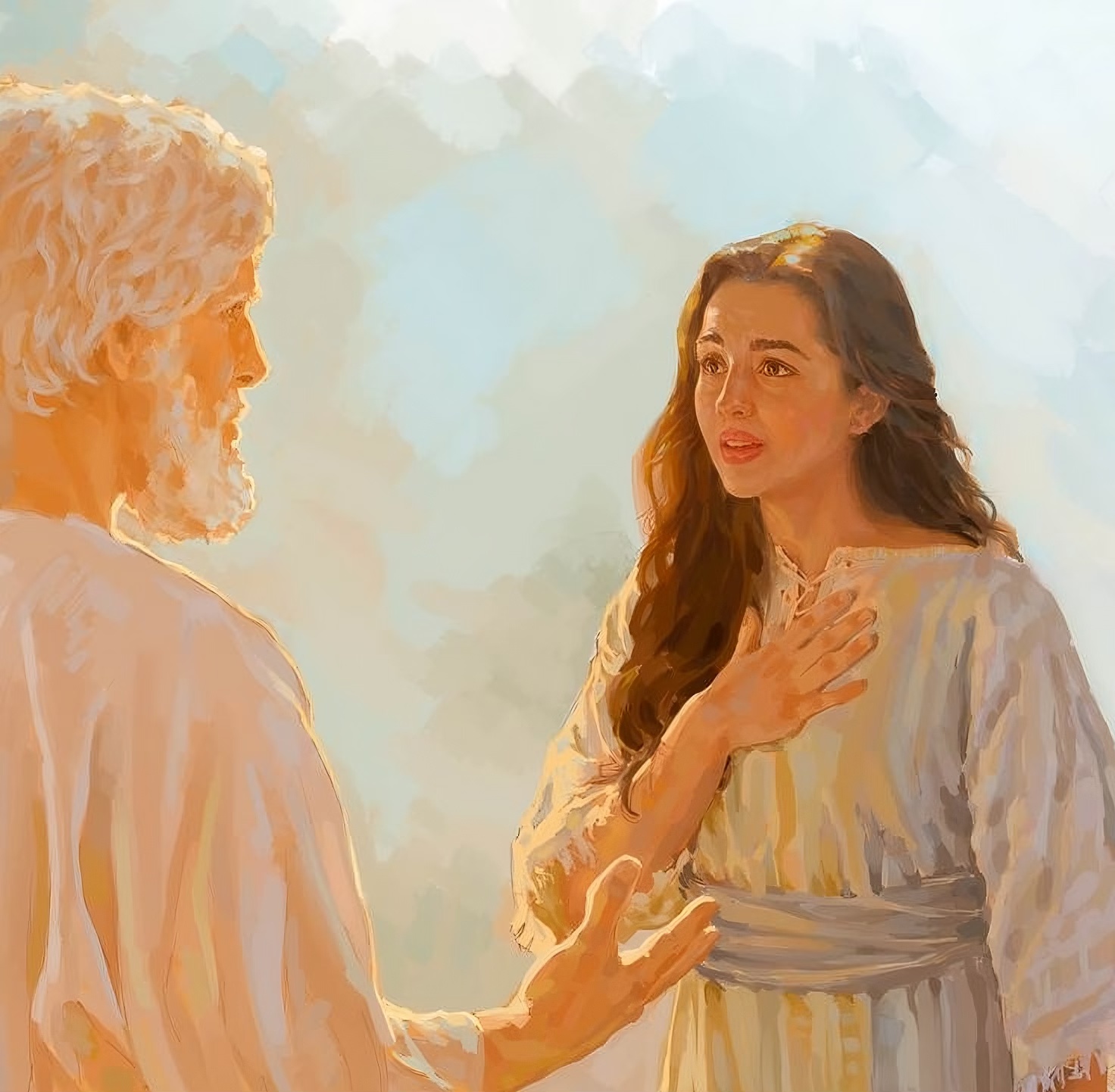
Mary’s Humility
Image Source: https://wol.jw.org/en/wol/d/r1/lp-e/202018206
_____________
New Testament Scholar, Walter Liefield wrote: “The account of Jesus’ nativity, beautiful and essential as it is, rests theologically on the angel Gabriel’s announcement to Mary.”1 One could add that it rests also on Mary’s response to the announcement. She is the first person to say yes to the good news, the first convert to Christianity. Proclaimed, in this case, by Gabriel. The angel’s appearance to Mary was anything but comforting. Gabriel greets her as “highly favoured.” Luke describes her as “greatly troubled.”
“One of the positive gains arising out of the dialogue between Roman Catholics and Protestants is the recognition that exaggerated claims for Mary, the mother of Jesus, on the one hand, have led to equally exaggerated reactions on the other. Her part in the story of redemption has been somewhat neglected by Protestants. Yet the incarnation required her submission and at so many points in the gospel story her example is worth contemplating. 2
Humility
The first attribute we can learn from Mary is humility. It was not enough that Palestine was considered a second-rate region in Rome. Mary’s hometown of Nazareth was disparaged by the Jewish people themselves3, and is unmentioned in the Hebrew Scriptures. In her spontaneous, prophetic song, rejoicing at Gabriel’s announcement, she calls herself the Lord’s humble servant (Luke 1:48), the Greek word for female slave.
Faith
In addition to humility, Mary demonstrated great faith. Earlier, in Luke’s account, we read of a similar angelic announcement to Zechariah, a priest, informing him that after years of infertility, he and his wife Elizabeth would become parents. Zechariah, who would have had a thorough knowledge of the Hebrew Scriptures, responds to the news with a question revealing his unbelief4: “How can I be sure of this?” (Luke 1:18) In comparison, Mary, upon receiving the news that she (still a virgin) would give birth to a son, asks the more nuanced question: “How will this be?” (Luke 1:34) Although she was greatly troubled at Gabriel’s appearance, she was not dismissive of his message. Further to this point, when Mary later visits Zechariah and Elizabeth, Elizabeth receives her own prophetic word of praise and exclaims among other things: “Blessed is she who has believed that what the Lord has said to her will be accomplished!” (Luke 1:15, emphasis mine).
Courage
Besides humility and faith, Mary also possessed tremendous courage. The stigma which would have swirled around Mary during her pregnancy, in that time and culture, must have been suffocating. D.A. Carson suggests that the charges of illegitimacy against Jesus (and therefore against Mary) was something which they had to bear throughout His lifetime and ministry. (See John 8:39-41)5
Following Jesus’ birth, Mary’s courage would be further tested by the pronouncement of Simeon on the occasion of Jesus’ presentation at the Temple. This devout man had been earnestly praying for and waiting on the Lord’s deliverance. Moved by the Spirit to go to the Temple for prayer he encountered the parents and the new-born Messiah. He whisked Jesus up into his arms (imagine some strange, old man, doing that to new parents in a large church setting today!) and gave this cryptic, yet prophetic declaration, saying: “This child is destined to cause the falling and rising of many in Israel, and to be a sign that will be spoken against, so that the thoughts of many hearts will be revealed. And a sword will pierce your own soul too.” (Luke 1:34-35 emphasis mine) Whatever that meant, it did not sound good, and it was not for the faint of heart.
Courage
As terrifying, intimidating and perplexing as all of this must have seemed to Mary, she did not balk at God’s revelation and plan for her, but, added willing obedience to humility, faith, and courage. “May it be to me as you have said” she responded to Gabriel. (Luke 1:38). What an example! And it was not a one off. Years later, at a wedding feast in Cana, where the wine supply was embarrassingly exhausted, Mary took the servants aside and instructed them with the words: “Do whatever He (Jesus) tells you.” (John 2:5) She was speaking from experience.
This Christmas, as we celebrate once more, the birth of our Saviour, we would do well to follow the example of the young woman whose response to God’s will for her was not only the turning point of her life, but became a turning point in the story of redemption. And we ask the Lord for that kind of humility, faith, courage, and obedience to receive Him anew and surrender afresh to his will. Merry Christmas!
1 Walter Liefeld, The Expositor’s Bible Commentary, ed. Frank E. Gaebelein, Matthew, Mark, Luke., vol. 8, 1984, 829.
2 Coutts, Frederick, ed. The Armoury Commentary: The Four Gospels. London: Hodder and Stoughton, 1973, 164-165
3 John 1:46
4 Note that, in Luke 1:20, Gabriel states that Zechariah has not believed his message, and for this he will be unable to speak until the birth of his son.
5 Carson, D. A. The Gospel According to John. Wm. B. Eerdmans Publishing, 1991, 352.
Let us search our hearts:
- Reflect on Ruth 1:16-17. How does her commitment challenge or inspire you in your relationships?
- Ruth’s story shows us that God uses ordinary acts of love and loyalty to fulfil His greater purposes. How can we remain faithful daily, trusting in God’s plan?
MAJOR DEAN SATTERLEE is an Adminsitrator of The Salvation Army Adult Rehabilitation Center, USA


Leave a Reply